| For the 2025/2026 school year our school’s learning focus is: | For the 2025–2026 school year, our school’s learning focus will shift to literacy. Over the past few years, we have concentrated on numeracy, and this focused effort has resulted in measurable growth. In 2022–2023, 29% of our Grade 4 and 7 students were identified as Emerging in Math on the Foundation Skills Assessment. By 2024–2025, we reduced that number to 15%. How can we support students who are developing in English Language Arts to deepen their reading comprehension, so they develop stronger reading proficiency and make meaningful connections to text and the world around them? |
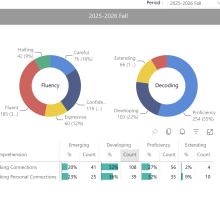
| The data that supports the need for this school learning focus is (Evidence-Informed Rationale): | While we will continue to support students in developing their numeracy skills, staff feel it is now important to prioritize literacy. In September, all teachers administered the Richmond Formative Reading Assessment, and our Kindergarten and Grade 1 teachers completed the Spark and Spark 1 screeners. The data collected through these assessments highlight literacy as an area of need and focus for this year. Specifically, student showed that they struggled demonstrating proficient ability in making connections with 52% in developing proficiency. |
| Priority Learners: | Reading assessment data indicated that students struggled with making meaningful connections, with the highest percentage of students performing at the Developing proficiency level. |
| Baseline Data: | September 2025 Richmond Formative Reading Assessment |
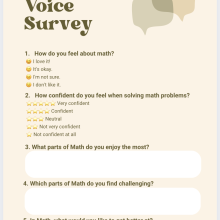
| Actions that the school will take to achieve the goals of our school learning focus include: | • Dedicate time at staff meetings to share learning, ask questions, and determine next steps. • Continue to provide opportunities for collaboration using the Pillars of Literacy in Learn 38. A small group of staff will participate in the district’s Collaboration Project with Literacy Consultant Lisa Jeronimo. To support building teacher capacity and a culture of collaboration, we invited Faye Brownlie to collaborate with a similar group of teachers to plan, collaborate, and co-teach a class. • Engage in professional learning focused on literacy during selected Pro D days. • Use the Richmond Formative Reading Assessment and SPARK screeners in September and May to collect data, monitor student progress, and evaluate the impact of instruction. • Gather student voice on their experiences and perspectives around reading and comprehension. |
| The intention of these actions is to make the following difference(s) for learners: | Support students in strengthening reading comprehension to improve overall reading proficiency, with a focus on making meaningful connections between text, self, and the world in different learning contexts. |
| We will know our actions are making a difference when we have data that demonstrates the following: | Success will be evident when students consistently make meaningful connections to text, self, and the world in day-to-day classroom activities and demonstrate this skill in the Richmond Formative Reading Assessment. Progress will be measured by a significant decrease in the number of students identified as Developing in English Language Arts and an increase in the number of students demonstrating proficiency in “making connections” on the Spring Reading Assessment. |
| Alignment Statement: | Aligning with District Strategic Priority 1: Success for All Learners, we are working to improve literacy outcomes for all students, with a specific focus on reading comprehension for learners who are Developing in their proficiency. By strengthening students’ ability to understand what they read through making meaningful connections (text-to-self, text-to-text, and text-to-world), we aim to improve overall literacy achievement and support student success across all areas of learning. |